



Using AI and EEG-Based Pre-Tests to Personalise Counselling

NEMA AI
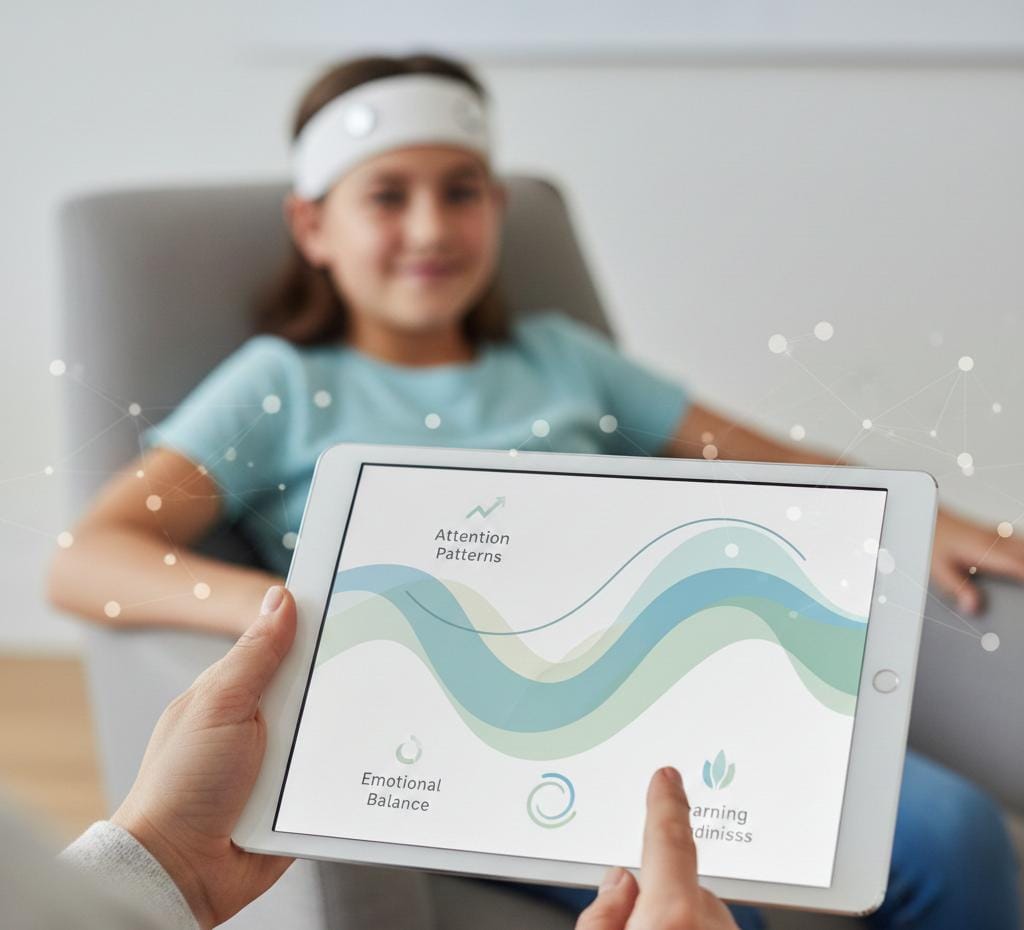
AI AND EEG-BASED PRE-TESTS: APPLICATION IN MODERN COUNSELLING
Pre-test helps in counselling. They allow you to see where a person stands before you choose any intervention. They are also sensitive to change over time. Previously, pre-tests relied on paper forms and lengthy interviews.
It can work, but sometimes it is blind to subterranean patterns. Today, thanks to advances in artificial intelligence and the use of electroencephalography. The first step of care is faster, deeper, and more objective.
AI sifts through vast numbers of data points to spot trends humans might not see. EEG records electrical activity in the brain as it happens. Then, it sees how the mind responds to tasks and emotions. When these tools are used, we can monitor stress, attention, and emotion regulation.
You also have a profile that guides you on how to individualise care for each person. This blog describes these pretests so that all practitioners can understand them. It shows why they matter. It also provides a detailed plan you can use in clinics, schools, and workplaces.
What AI-Based and EEG-Based Pre-Tests Are
A pre-test, by artificial intelligence, uses data from multiple sources for grading. The data involves digital questionnaires, reactions, typing, and voice characteristics in an environment. The A.I. synthesises these inputs. Identifies patterns across categories and flags items for a more detailed look.
Some pre-tests are EEG-based and use a wearable cap or a headband with small sensors. These sensors, in a resting state or performing basic tasks, read brainwaves at the scalp.
The signals reveal when a person is vigilant or inattentive. They also reveal how the brain reacts to stress and cues to emotion. Because EEG is quick and noninvasive, you can use it as a care to provide objective markers for your intake.
The two approaches complement each other. Complex behaviour and language: AI can parse complex behaviour and text data. EEG contributes a direct view into the states of mind during an in-session. Collectively, they provide what's difficult to achieve with questionnaires alone.
Why These Pre-Tests Matter
They matter for three reasons.
They promise precision.
They save time.
They enable personal care.
It increases the accuracy because you are no longer just relying on self-reports. Most people answer most of the time honestly, but answers may be influenced by memory and mood. Objective layers can also be added with AI and EEG. Savings in time are due to the immediate signal scoring and capture. Then you can pick which approach to use and set goals that are appropriate for that person.
How AI Discovers New Trends in Human Behaviour and Psychology
AI is great when the data set is very large, when the data set is very diverse. It can group similar profiles and anticipate potential needs. It is also capable of learning micro-patterns within a single session.
Here are typical indicators AI could rely on in a pre-test configuration.
Use them sparingly and only with clear user consent and strict privacy controls.
This is not one score, but a series of questionnaires over time.
Response speed and inconsistency checks.
Short open answers for language patterns.
Click trajectories and error rates in attention tasks.
Client sleep and activity logs, if shared.
The inputs are mixed by the system and evaluated for poor trends. One person might do attention tasks at the normal rate and make lots of late-stage errors. That can imply fatigue or wandering off. The late-evening, but not morning, mean mood value may feel that it trends negatively in mood words. They can help direct session timing or sleep support. Just don’t let the decider be the system alone. The counsellor checks the pattern and goes on to ask further questions.
What EEG Reveals in Real Time?
EEG captures the rhythms in the brain:
Different bands are often associated with different states. On a pre-test, there are three general categories you care about:
Being “alert,” stress reactivity, and emotion regulation.
Alertness and focus:
The focused brain exhibits more regular patterns and fewer lapses during a task. Frequent lapses suggest attention drift.
Stress reactivity:
Fast shifts sometimes become observable when a person responds to a stress cue. High stress load can be indicated by high reactivity and low recovery.
Emotion regulation:
In mild emotional cues, stable recovery would indicate flexible control. Slow and erratic recovery points toward regulatory difficulties.
Here is the combined workflow commonly used:
Consent and explanation: Explain the procedure in lay terms. Answer questions. Provide an opt-out for every item.
Digital intake: Collect brief, focused questionnaires. Provide brief open-ended prompts if beneficial.
Task battery: Try a 5 to 10-minute small task set. Include an attention, working memory task, and a mild emotion cue task.
EEG capture: Take a one to two-minute rest recording. Also record during tasks.
AI analysis: Allow the system to score the forms and response patterns. Review the trends it surfaces. Joint review. Sitting with the customer and walking them through the summary in plain language. See what holds up when compared with how they lived.
Plan: 2 to 4 goals. Take two to four goals that would use that data. Select methods that agree with the pattern. Decide on how you will measure success with change.
The aim is a kind and respectful first step. Keep the process short. Concentrate on the quality of the signals, and not the quantity of the assignments.
Practical Applications:
Pre-tests do not diagnose; they put you on a path to plan care and establish a baseline. They bridge the gap on common worries in the following way.
ADHD
ADHD is related to attention, impulse control, and planning. An AI and EEG test will tell you where your attention is drifting and when you are making errors. It can also take you through the ebbs and flows of effort over a short session. Look for frequent drops in the EEG during easy aspects of the task.
Autism
Autism is a difference in social communication and sensory processing. During a pre-test, make tasks gentle and predictable. AI can see patterns of response to emotion recognition tasks. EEG looks can reveal reactions of stress to sensory stimuli.
Dementia
Early cognition change is facilitated by clear baselines. Even memory and orientation tests can uncover small trends families won’t notice. AI can follow the pattern of delays and repetitions. EEG display of decreased task engagement is possible.
Stress-Related Conditions
Sleep, attention, and emotion control are all impaired by chronic stress. Pre-testing could reveal a brief stress reactivity task and a resting record. AI can discover what time of day people are most stressed. EEG can indicate slow responding post-cue.
NEMA AI is a startup that simplifies pre-tests through assessments and data insights. It empowers counsellors to deliver faster, personalised, and evidence-based support.