



Neurofeedback Games for ADHD: Do They Work?

NEMA AI
Millions of kids and adults also have ADHD. It can be difficult to focus, sit still and control impulses. Medication and therapy are the usual treatments. They can be quite useful, but they are not infallible. Medicine may bring side effects. For children, therapy can sometimes be slow or boring.
Enter neurofeedback games. These games purport to train the brain while children play. The idea sounds exciting. But are they really effective? Let’s take a closer look.
What Are Neurofeedback Games?
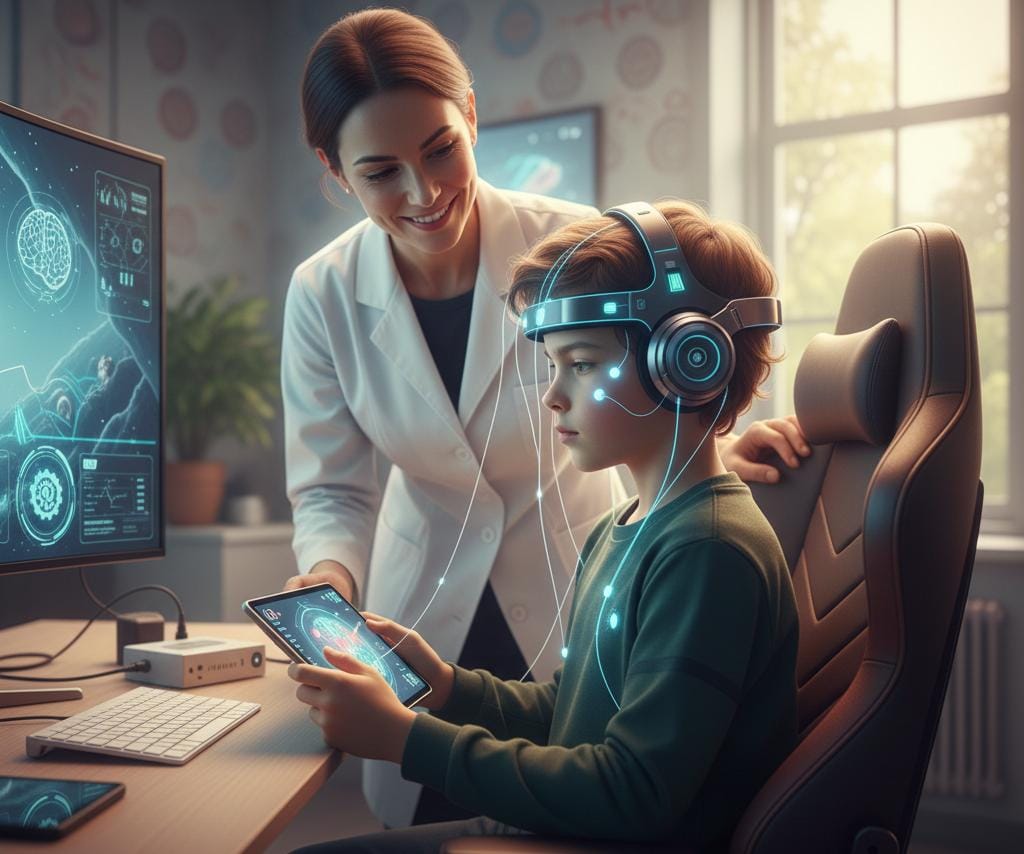
Neurofeedback is a form of brain training. It relies on EEG sensors, which are placed on the head to record brain activity. These sensors read brainwaves and transmit the signals to a computer.
In the game, your brainwaves determine what takes place:
A rocket goes higher if the child remains attentive.
A school of fish swims smoothly as long as the child keeps quiet.
The puzzle emerges when the brain reveals consistent patterns. The game slows down or stops if the child gets distracted. This feedback teaches the brain. Over time, the brain gets better at coming back to this state associated with attention and relaxation.
It’s similar to going to the gym. Muscles grow stronger with practice. Similarly, the brain can develop focus skills with repeated practice.
What Does the Research Say?
Positive Findings
Some studies report good results. Children who played neurofeedback games demonstrated:
Improved attention in school and at home.
Better impulse control (they do fewer random shit).
Calmer moods and less frustration.
Parents will often comment that homework is a breeze. 9) Teachers sometimes experience fewer classroom disruptions. Seeing these changes typically takes weeks of consistent training.
Mixed or Limited Results
But not all research is on the up and up. Others have shown minimal change, or no difference at all, when compared with “sham” training. In those cases, the benefit may have been due to the additional attention children received from their therapists — and not the neurofeedback.
Such a conclusion has been drawn by review after review of all available studies: promising, but not proven. Many of the trials are small, and long-term effects aren’t known. More research is necessary before experts can confidently state that neurofeedback helps people with ADHD.
Potential Benefits
With such mixed evidence, many families think hi-tech neurofeedback games are still worth a shot. Here are some reasons why:
Drug-free help – Families are relieved to forget drug side effects like lost appetite or sleep troubles.
Fun and motivating – Children enjoy playing games. They are more likely to cooperate in training when it’s play.
Skill building – Medicine is active while it remains in the body. Neurofeedback, in contrast, seeks to train the brain to develop enduring skills. Builds self-esteem – As kids get into the flow of winning, they see real progress. That creates some feeling of agency and self-trust.
Challenges and Limitations
Like any treatment, neurofeedback games have their limits. Families should be aware of these before enrolling:
It requires consistency: Children have to play regularly, routinely several times per week, for months.
The progress is slow: You generally won’t see gains right away, but after many sessions.
The evidence is mixed: some children gain, while others do not improve substantially.
And costs can run high: Professional neurofeedback programs may be costly. There are cheaper home tools that exist, but they widely vary in the results that they produce.
Not a cure: ADHD is complex. Neurofeedback can be beneficial, though it won’t “get rid of” symptoms.
How Do They Stack Up Against Traditional Treatments?
Medication
The most prevalent ADHD treatment is using stimulant medications. They often reduce symptoms quickly. A child may feel calmer and more focused within the first few hours. But side effects may include sleep problems, loss of appetite and mood changes.
The same isn’t true of neurofeedback. It is slower but side-effect-free. For some families, it’s a trade-off worth considering.
Behavioral Therapy
A type of behavioural therapy helps children and parents develop targeted strategies for dealing with ADHD. It can be an establishment of routines, a system of rewards and self-discipline. It works, but it can feel punitive to kids who don’t love rote tasks.
Neurofeedback has the same intention: developing enduring skills. But since it’s games, it can also feel less like work and more like play.
Where Neurofeedback Fits
The most constructive way to view neurofeedback is as an adjunct. It is not medicine or therapy. But it can work together with them. For some children, the best result comes from doing all three — medicine, therapy and training.
Benefits for Children and Families
Academic Improvement: Many parents try neurofeedback because they are concerned about school. Children who train regularly often:
Pay attention longer in class.
Complete homework with fewer reminders.
Handle tests with less stress.
Small shifts in focus can help students improve grades and reduce teacher frustration.
Confidence Building
ADHD can take a toll on self-esteem. Children may feel “different” or “not good enough” when they are unable to sit still or complete assignments. With neurofeedback, that opportunity for success comes on their own terms.
When a rocket rises skyward as a result of its focus, it receives evidence of its power. This builds confidence. Eventually, they grow to believe they are more competent in school, sports and with friends.
Peace of Mind for Parents
Parenting (the verbs you do in response) a child with ADHD is exhausting. Parents fight the daily wars of homework, bedtime and behaviour. Some of this burden is redoubled with neurofeedback.
Since the kids love the games, parents don’t have to battle them when it comes time to practice. It’s comforting to see slow and steady progress. When families see their child engaged and improving, they have hope.
Considerations Before Starting
If parents are considering neurofeedback games, they should:
Consult a pro – A doctor or therapist can determine if this is the right answer for your child. 2) Check out the program – Some games are research-based, others aren’t. Choosing carefully is important.
Be honest – Changes may be slow or not very dramatic.
Cost and time plan – Consistent classes require dedication from parents and children.
Looking Ahead
High-tech mental health is going beyond meditation apps and online therapy. Neurofeedback games are an example of such a trend.
Among many offshoots of this trend are so-called neurofeedback games. In the future, there may be systems that are more advanced, less expensive and have better research behind them. Schools and clinics could adopt them more broadly if studies found enduring benefits.
For the time being, they remain a promising yet not fully proven tool. They offer joy, motivation and hope, but families should consider them part of a larger support plan rather than a cure.
Conclusion
Games for neurofeedback for ADHD sound amazing — and they are. They provide children a drug-free, safe way to practice focus. They make therapy fun, rather than boring. They could enhance school performance, raise confidence, and even help reduce parental stress.
But they are not perfect. Results are mixed, progress is slow, and research remains behind. They should be considered an adjunct, not a substitute, to established treatments like medication and behavioural therapy.
The balanced view is that neurofeedback games are worth a look for any family that wants more tools to try. They may not fix everything, but they can add enjoyment, hope and purpose to the ADHD path.